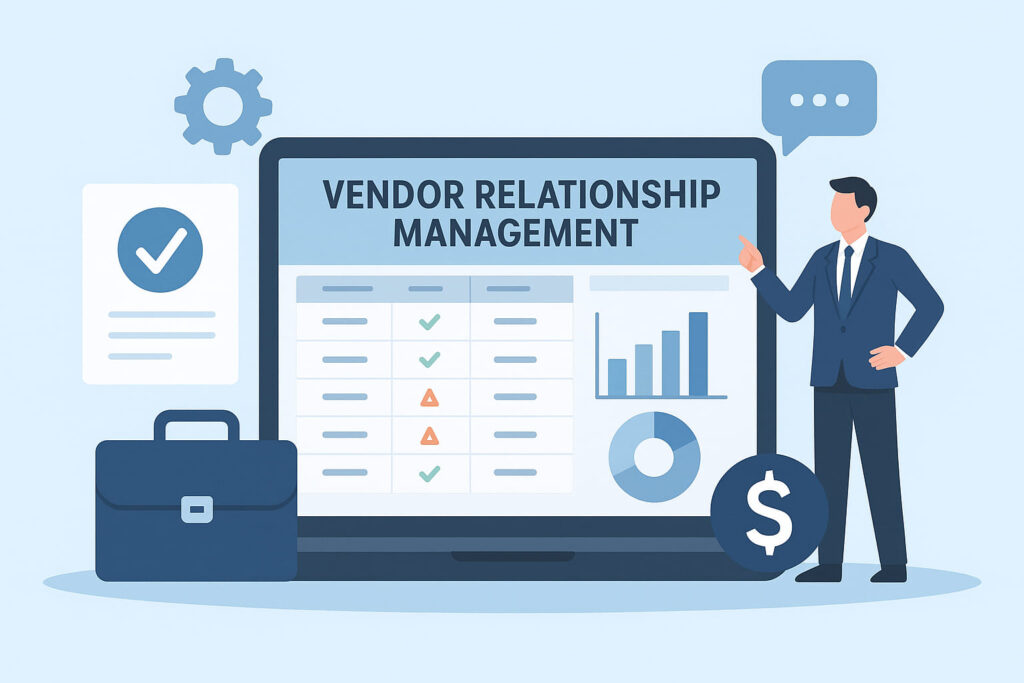
Managing vendor relationships manually is costing your business money, time, and competitive advantage. As vendor networks expand and compliance requirements tighten, spreadsheets and email chains simply can’t keep pace. Vendor relationship management software has emerged as a critical tool for organizations seeking operational efficiency, risk mitigation, and strategic supplier partnerships.
The Business Case for VRM Software
Modern businesses face mounting pressure to optimize vendor relationships while controlling costs. Organizations typically work with dozens or hundreds of vendors across multiple categories—software providers, service contractors, suppliers, and consultants. Each relationship involves contracts, performance metrics, compliance requirements, and financial transactions that demand systematic oversight.
Without dedicated vendor relationship management software, critical information scatters across departments. Procurement maintains one database, finance tracks another, and individual departments keep their own vendor lists. This fragmentation creates visibility gaps, duplicate spending, compliance risks, and missed renewal deadlines that drain resources.
Research shows that businesses implementing VRM software reduce vendor-related costs by 15-20% within the first year. These savings stem from multiple sources: better negotiating leverage through performance data, eliminating duplicate vendors, automated workflows that reduce administrative overhead, and proactive risk management that prevents costly incidents.
Core Capabilities That Drive Results
Centralized Vendor Database: Effective vendor relationship management software creates a single source of truth for all vendor information. Every stakeholder accesses the same data—contact details, contract terms, performance history, compliance documentation, and communication records. This centralization eliminates the confusion and errors inherent in maintaining separate spreadsheets across teams.
Automated Workflow Management: Manual processes consume disproportionate time relative to their value. VRM software automates routine tasks, including vendor onboarding, approval routing, compliance checks, performance evaluations, and renewal notifications. Teams redirect this reclaimed time toward strategic activities like vendor negotiations and relationship development.
Performance Analytics and Reporting: You can’t improve what you don’t measure. Modern VRM platforms track key performance indicators, including delivery times, quality metrics, cost variance, and service levels. Real-time dashboards provide instant visibility into vendor performance, enabling data-driven decisions about contract renewals, vendor consolidation, or partnership expansion.
Risk Assessment and Monitoring: Every vendor relationship introduces potential risks—financial instability, security vulnerabilities, compliance gaps, or operational dependencies. Vendor relationship management software continuously monitors risk factors, alerting stakeholders to emerging issues before they escalate into expensive problems. This proactive approach protects business continuity and reputation.
Strategic Impact Beyond Cost Savings
While cost reduction represents an important benefit, vendor relationship management software delivers strategic advantages that extend beyond immediate financial savings. Better vendor relationships foster collaboration, innovation partnerships, and preferential treatment during supply disruptions or capacity constraints.
Compliance management grows increasingly complex as regulations multiply and penalties intensify. VRM software automates compliance tracking across multiple frameworks—data privacy, industry certifications, financial regulations, and ethical sourcing standards. This automation reduces compliance burden while minimizing penalty exposure.
Conclusion
As vendor networks expand and business complexity increases, manual vendor management becomes unsustainable. Organizations clinging to spreadsheets and email-based processes face mounting inefficiencies, escalating risks, and competitive disadvantages against businesses leveraging modern VRM technology.
The vendor relationship management software market continues to evolve rapidly, with AI-powered analytics, predictive risk modeling, and deeper integrations becoming standard features.