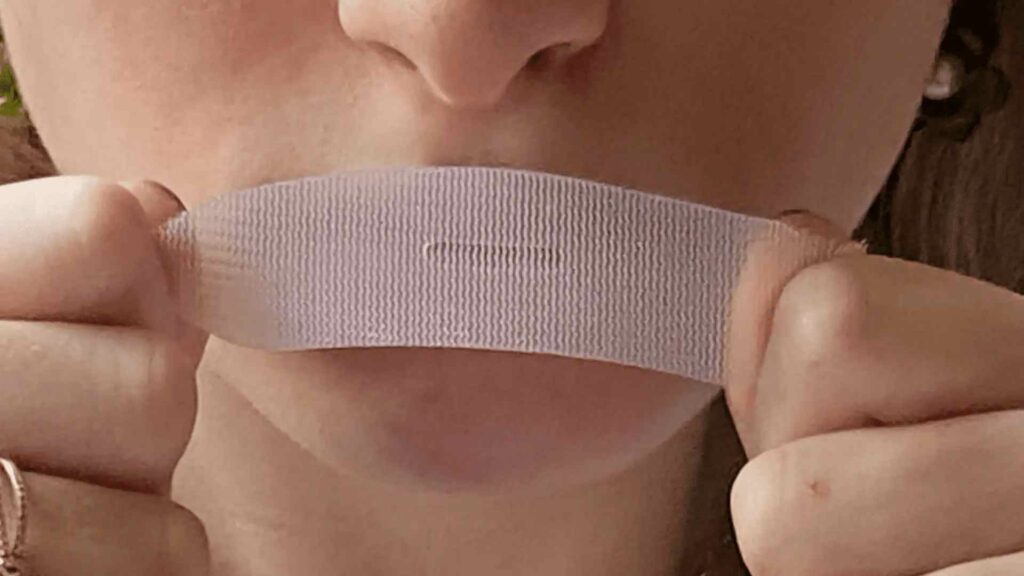
Ever heard of mouth taping? It’s exactly what it sounds like. Snoring tape is a specialized adhesive strip you place over your lips before heading to bed. The logic is simple: if your mouth is forced shut, you have no choice but to breathe through your nose. By making nasal breathing the default, you can often quiet down those throat vibrations that cause snoring, stop waking up with a mouth as dry as a desert, and actually get a decent night’s rest.
While it’s all over social media as a “genius sleep hack,” let’s be clear—it’s more about training your habits than curing a medical condition. It basically stops your tongue and soft tissues from sliding back and blocking your throat, which is exactly what happens when your jaw hangs open mid-sleep.
How Does It Actually Work?
To understand why this helps, you have to look at how we’re built. Your nose isn’t just for smelling; it’s a built-in air conditioner that warms and filters every breath before it hits your lungs.
When you spend the night breathing through your mouth, things go south pretty fast. The air is cold and harsh, which irritates your throat. Plus, when your jaw drops, your airway narrows, making those throat tissues flutter and create that lovely snoring sound. Using a small strip of skin-safe tape acts as a physical “nudge” to your body. Stick with it, and you can actually retrain your brain to keep your mouth closed on its own.
The Perks of Breathing Through Your Nose
Using tape isn’t just about keeping things quiet for whoever is sleeping next to you. It actually changes how your body handles oxygen. People who make the switch often notice a few big changes:
- Goodbye, Dry Mouth: If you wake up desperate for a glass of water, you’re probably mouth-breathing. Keeping your mouth shut keeps your tissues hydrated.
- Better Dental Visits: Breathing through your mouth messes with the pH of your spit. That’s bad news for your teeth and can lead to more cavities or gum issues.
- A Nitric Oxide Boost: Nasal breathing produces nitric oxide. It sounds fancy, but it’s just a molecule that helps your blood flow better and moves oxygen through your body more efficiently.
Safety First: When to Skip the Tape
It might just be a piece of tape, but you’re still messing with your airway. You have to be smart about it.
The Sleep Apnea Risk If your snoring is actually Obstructive Sleep Apnea (where you literally stop breathing during the night), taping your mouth shut can be dangerous. Your brain needs to be able to force a “panic breath” through your mouth if oxygen levels tank. If your mouth is taped shut, you’re blocking that safety valve.
You Need Clear Sinuses Don’t even think about using tape if:
- You’re stuffed up: If you have a cold or a deviated septum, you’ll just end up struggling for air.
- You’ve had a few drinks: Alcohol relaxes your throat and dulls your reflexes. You won’t wake up as easily if you start having trouble breathing.
- You feel claustrophobic: If the idea of a sealed mouth makes you anxious, you won’t sleep anyway.
Tips for Beginners
If you’ve cleared it with a doctor and want to try it out, don’t just grab any roll of tape.
- Use the Right Stuff: Grab medical-grade, hypoallergenic tape. Please, stay away from duct tape or anything not meant for skin.
- Try the “Vertical” Strip: You don’t have to tape your whole mouth shut. Just one strip right down the middle usually does the trick. It keeps your lips together but leaves the corners open in case you need to gasp for air.
- The Daytime Trial: Wear it for 10 minutes while you’re reading or watching TV. It helps your brain get used to the feeling so you don’t panic when the lights go out.
- Protect Your Lips: A little lip balm goes a long way. It stops the tape from ripping at your lips when you take it off in the morning.
The Bottom Line
Snoring tape is a cheap, low-tech way to help healthy adults stop snoring and breathe better. But it’s not a magic fix for everyone. If you’re constantly exhausted or your partner says you stop breathing at night, skip the tape and go see a sleep specialist. At the end of the day, breathing safely matters way more than being quiet.